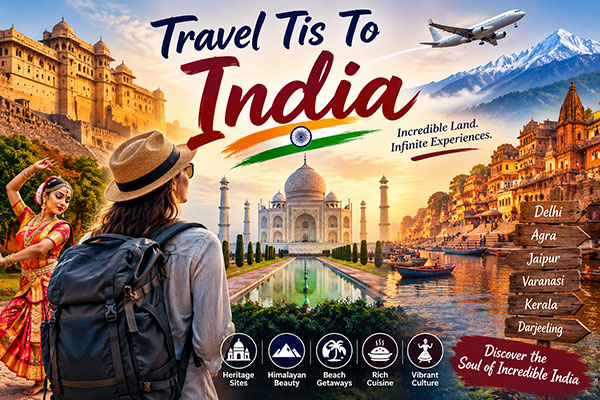
Travel Tips To India - Part 3
Travel Tips To India - Part 3
By Dr. Gour Kanjilal
( Author Tourism Representative Govt Of India. )
Common Precautions
Water has to be from a reliably clean source. Try to use known brands of mineral water. Always carry a water bottle with you; this helps you from dehydration also, as sometimes a lot of walking is required at places like cave temples, treks, groups of temples, Fort areas.
Carry a first-aid kit with adhesive bandages, thermometer, water purification tablets, antibiotics, antiseptic creams, mosquito repellents. Once on the road, or even by air or train, take precautions that can save you from a running nose, tummy troubles, dizzy body temperatures, giddy hangovers, etc. Varied weather in India makes such precautions advisable. It is advisable to take all the vaccinations needed.
To avoid malaria, dengue, do carry mosquito repellents and sprays. You may join Sound and Light shows that take place in the evenings and open areas around historical monuments. If you can bear the heat, wear clothes that cover most of the body.
Food
Best is to be careful about food and water. Eating raw salads and fried food from a roadside vendor is absolutely NO. I know such foods are tempting with their aroma, but it is better to go to a clean restaurant that is worth it.
If you are visiting from a yellow fever zone, do carry a yellow fever vaccination certificate. This is just to play safe.
A sun cap is very essential to avoid blazing sun glare in summer months, and even a folding umbrella.
Main Season Period
Spring: Mid-March – Mid-April
Summer: Mid-April – Mid-June
Monsoon: Mid-June – Mid-September
Autumn: Mid-September – Mid-November
Winter: Mid-November – Mid-February
In all seasons, drinks like tea and coffee are available everywhere.
Food
Indian cuisine is very attractive, as different preparations of Indian dishes are prepared in Indian restaurants, which offer an enormous variety of Indian foods.
Explore more opinions, analysis, and insights by Sujit Chatterjee .