Opposition Warns of 'Police State' as Bengal Anti-Goonda Bill Clears Assembly
By Kunal Chatterjee

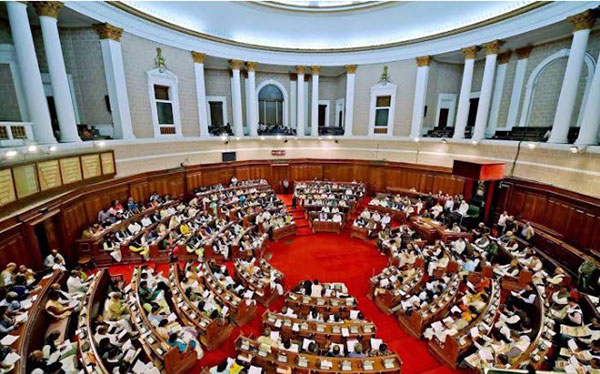
The West Bengal Legislative Assembly on Monday passed the West Bengal Public Safety and Control of Anti-Social Activities Bill, 2026, popularly known as the Anti-Goonda Bill, after a heated debate that exposed sharp divisions between the ruling BJP and the opposition. While the government defended the legislation as a necessary step to curb anti-social activities and protect public property, opposition legislators warned that its broad provisions could be misused to suppress dissent, expand police powers, and undermine democratic rights.
The debate also included discussions on the West Bengal Maintenance of Public Order Amendment Bill, with members across party lines expressing contrasting views on the need for stricter law enforcement and safeguards against misuse.
ISF MLA Naushad Siddique emerged as one of the strongest critics of the proposed legislation. While supporting the principle that those responsible for damaging public property should be held financially accountable, he argued that the bill extended far beyond that objective. Stressing that compensation for vandalism should follow due legal process without discrimination, Siddique questioned whether the law would be used to criminalise political opposition.
He expressed concern over provisions allowing arrests and detention based merely on suspicion, asking whether such powers would target genuine criminals or individuals holding opposing political views. Drawing parallels with controversial laws such as POTA and MISA, he cautioned that a confident government should not rely on preventive detention or secret watchlists.
Referring to custodial deaths in the Baruipur police district, where five people reportedly died in custody within a week two years ago, Siddique argued that expanding police powers without stronger safeguards could prove dangerous. He urged the government to refer the bill to a Select Committee after a public hearing to ensure innocent citizens were protected.
Questions over police discretion also surfaced from within the treasury benches. Trinamool Congress MLA Prasun Banerjee, associated with the rebel Ritabrata Banerjee camp, expressed concern over provisions allowing police to act solely on suspicion. He questioned whether such authority could pave the way for a "police state."
Another TMC legislator, Kunal Ghosh, supported the objective of tackling anti-social activities but maintained that the legislation required significant amendments. Recalling his earlier criticism, he remarked that certain provisions resembled "a 2026 version of the British-era Rowlatt Act" and also urged that the bill be examined by a Select Committee before implementation.
Defending the legislation, Tourism Minister Shankar Ghosh argued that stronger laws were necessary to curb violence, vandalism and organised crime. He said the time had come to send a clear message that destruction of public property would no longer be tolerated, alleging that the state had witnessed years of violence and unrest.
Referring to protests over issues such as the CAA and Waqf, he asserted that peaceful demonstrations remained a constitutional right but violence would invite strict action. He further claimed that existing provisions under the Bharatiya Nyaya Sanhita were inadequate and noted that similar laws existed in states such as Gujarat, Kerala and Rajasthan.
Municipal Affairs Minister Agnimitra Paul said the legislation would also enable victims of violence to seek compensation for damage to private property, including homes, shops and businesses. She rejected allegations of misuse, insisting that the law targeted criminals and vandals rather than peaceful protesters.
Introducing the bill, Chief Minister Suvendu Adhikari said recent incidents of violence had made stronger legislation necessary. Referring to the family of Hargobind Das, who was killed during violence in Murshidabad, he argued that such tragedies highlighted the need for tougher legal measures.
Despite repeated assurances from the government that the law would be used only against anti-social elements, opposition members remained unconvinced. They warned that unless the legislation incorporated stronger safeguards, judicial oversight and independent scrutiny, it could become a powerful instrument capable of targeting not only criminals but also political opponents and dissenting voices.
